Livestock
All-In All-Out vs Continuous Stocking: Which System Reduces Mortality in East Africa?
By FlockDash Team
·
19 March 2026
·
5 min read
Should poultry farmers use All-In All-Out or Continuous Stocking? Learn how these two poultry management systems affect mortality rates, disease control, biosecurity, and profitability in East African poultry farming. Discover which system helps reduce bird deaths and improves broiler and layer production success.
One of the biggest challenges facing poultry farmers in East Africa is bird mortality. Whether raising broilers, layers, indigenous chickens, or improved breeds, disease outbreaks and unexplained deaths can quickly turn a profitable flock into a financial loss.
Many farmers focus on feed quality, vaccinations, and housing improvements but overlook one critical management decision: the stocking system they use.
The choice between the All-In All-Out (AIAO) system and the Continuous Stocking system can significantly affect bird health, disease transmission, biosecurity, production efficiency, and overall profitability.
In this article, we compare both systems and explain which one is most effective at reducing poultry mortality in East African farming conditions.
The All-In All-Out (AIAO) system is a poultry management method where:
After birds are sold or transferred, the poultry house is cleaned, disinfected, and left empty for a short period before receiving new chicks.
A farmer purchases 500 day-old broiler chicks.
This is the All-In All-Out system.
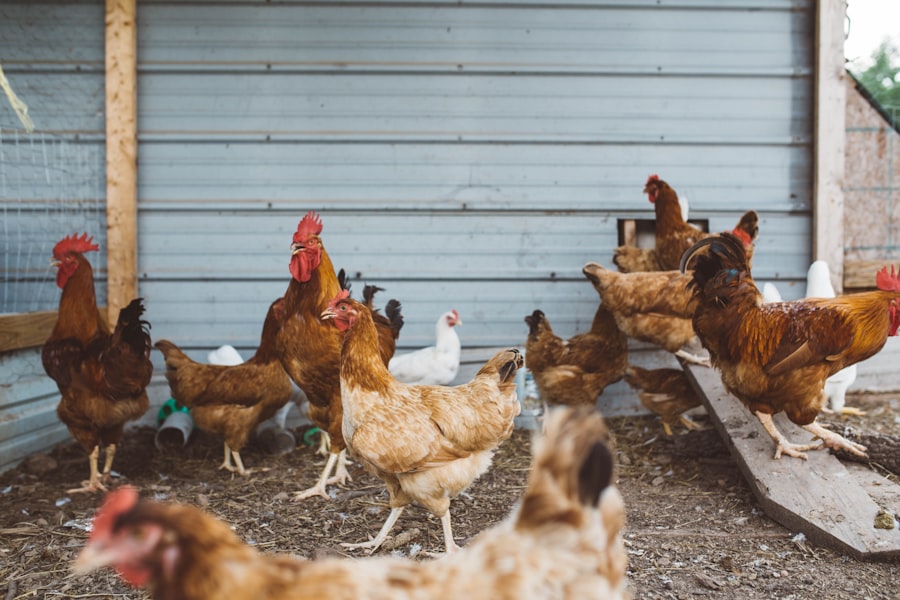
Continuous Stocking occurs when birds of different ages are kept on the same farm or even in the same poultry house.
New birds are added regularly while older birds remain.
A farmer:
This creates multiple age groups within the same production environment.
Many small-scale poultry farms in East Africa use this system because it provides continuous production and income.
Bird deaths can result from:
The management system used can either increase or reduce the spread of these diseases.
One of the biggest advantages of AIAO is disease control.
When all birds leave:
Without birds present, many disease-causing organisms die before the next flock arrives.
This dramatically reduces infection risks.
After flock removal, farmers can thoroughly clean:
Disinfectants work best when houses are empty.
Continuous stocking rarely allows complete sanitation.
Biosecurity becomes much easier because:
Strong biosecurity directly reduces mortality rates.
Birds of similar age have:
This reduces competition and stress.
Less stress improves immunity and survival rates.
Older birds may carry diseases without showing symptoms.
When new chicks arrive:
This is one of the most common causes of disease outbreaks on continuously stocked farms.
With birds always present:
The farm effectively becomes a permanent reservoir for infections.
Different age groups require different vaccination schedules.
Managing multiple flocks simultaneously often leads to:
Farmers cannot properly disinfect occupied poultry houses.
As a result:
| Factor | All-In All-Out | Continuous Stocking |
|---|---|---|
| Disease Control | Excellent | Moderate to Poor |
| Mortality Risk | Low | Higher |
| Biosecurity | Strong | Difficult |
| Cleaning Efficiency | Excellent | Limited |
| Vaccination Management | Easy | Complex |
| Production Flexibility | Lower | Higher |
| Cash Flow Frequency | Periodic | Continuous |
| Long-Term Profitability | High | Variable |
Despite its disadvantages, continuous stocking remains common because:
Farmers can sell birds throughout the year.
This helps meet daily household expenses.
Instead of purchasing hundreds of chicks at once, farmers buy smaller batches over time.
Some farmers lack separate poultry houses for different age groups.
Continuous stocking becomes the only practical option.
If All-In All-Out is not possible, farmers can reduce risks by:
Keep younger birds and older birds in different sections.
Maintain records for every flock.
Isolation helps prevent disease spread.
Good airflow reduces respiratory diseases and stress.
For commercial broiler production, All-In All-Out is almost always the superior option.
Benefits include:
Most successful commercial broiler farms worldwide use this system.
Layer operations sometimes require modified systems because egg production is continuous.
However, separate housing for different age groups is still recommended to reduce disease transmission.
Consider a flock of 1,000 broilers.
The difference of 60 birds can represent a significant increase in revenue and profit.
As flock sizes grow, the financial impact becomes even greater.
When it comes to reducing poultry mortality in East Africa, the All-In All-Out system is generally the clear winner. By breaking disease cycles, improving biosecurity, simplifying vaccination programs, and enabling thorough cleaning and disinfection, AIAO significantly reduces the risk of disease outbreaks and bird deaths.
While continuous stocking may offer more frequent cash flow and flexibility, it often comes with higher mortality rates and greater disease pressure. Farmers seeking maximum flock health, lower losses, and better long-term profitability should strongly consider adopting the All-In All-Out system whenever possible.
In poultry farming, preventing disease is always cheaper than treating it—and the right stocking system is one of the most effective tools for achieving that goal.
Join African farmers managing smarter with FlockDash.